
Searching Cases by Name
Arizona Public Access to Court Information is where a Graham County name search should start. It costs nothing. Spell the name exactly as the Graham County court papers show it. Common surnames pull up plenty of matches. Check the court, the case type, the filed date, and each party's role before you open anything. A shared name alone proves nothing. The record may belong to someone else entirely.
- Open Arizona Public Access and retype the verification characters. Click Submit if pressing Enter does not pass the gate.
- Choose party or name search. Enter the last name or business name, then add the first name when it helps narrow the result.
- Use the court or county control to select Graham County or the known participating court when that choice appears.
- Compare matching rows by court, case number, case type, status, and filed date. Open only the likely case.
- Read the event history, then confirm an important fact with the court of record because the public index is not official.
| Field Label | Type | Required | Notes |
|---|---|---|---|
| Verification words | Text/CAPTCHA | Yes | Retype the image before search. |
| Last Name/Business Name | Text | Name search key | Use the spelling on filed papers. |
| First Name | Text | Optional | Add it to narrow a common name. |
| Court/County | Dropdown | Optional | Choose Graham or the correct court when offered. |
A name match is only a lead. It is not proof of identity. Before relying on a result, check the Graham County court, the case number, the case type, and the filed date against court papers you already have. If a docket entry still seems unclear, call the court of record rather than assuming two cases belong to the same person with a similar name.
Graham County Case Search Gate
Before you reach the Graham County case and party fields, the statewide service shows a verification-word screen. The characters are random. This gate is ordinary, not a paywall. No account is needed. If your entry fails, the official fix is to type the characters again and click Submit rather than press the Enter key. The Arizona Judicial Branch Self-Service Center resources page offers a public route to find a case, forms, payment tools, and legal information.

The picture marks an official state resource. Even so, match every result to the proper Graham County court, and confirm details with that court's clerk.
Graham County Case Search Filters
Begin with a wide net. A stray letter or misspelling should not hide the case, so filter down to Graham County. Public Access reaches 177 of Arizona's 184 courts. Without the filter, a name search can drag in records from far beyond Graham County. A filed notice from Graham County hands you the precise case number. It also gives you the right court and the correct spelling. Age, partial addresses, and guesses built on a familiar name make weak comparison points.
The court filter also tells you which clerk holds the file. Graham County Superior Court handles felony, general civil, family, probate, and juvenile matters. Access limits apply. Graham County Justice Court keeps county and state officer traffic, misdemeanor, small-claims, eviction, protection-order, and early felony records. Police matters from Safford, Thatcher, and Pima sit in GVC Municipal Court.
Searching by Case Number
A full Graham County court case number is the strongest search key there is. Type it just as the notice or order prints it, letters and leading zeroes included. Arizona Public Access takes case numbers, and eAccess accepts either a complete or a partial one. Graham County Justice Court posts local type codes: CT for civil traffic, CTR for criminal traffic, CM for non-traffic misdemeanor, CV for civil categories, CF for preliminary felony stages, and SC for small claims.
Never build a full number out of a bare code. Rely on the identifier the court itself printed. One incident can leave a Justice Court CF record from the initial appearance or preliminary hearing, then a later Superior Court record once the case transfers. So a second number may just mean two stages in two courts. It is not a duplicate.
Graham County eAccess Search
Case documents filed with Graham County Superior Court on or after July 1, 2010 live in Arizona eAccess, the account-based option to check. It serves up eligible civil and criminal filings for the Superior Court. Keep it straight from two other tools, though. It is not the filing system. It is also not the free Public Access docket search. Once you log in, Case & Party Search opens by default. Type a full or partial case number or party name there. Then switch from the All Courts default to Graham County Superior Court before you search.
Advanced Search lets you stack criteria with AND, OR, or NOT. Graham County documents that come up can be bought one at a time or through a subscription. Electronic certification costs extra. Do not expect every eligible record online. Older files, sealed material, and other gaps still call for a trip back to the clerk. Filing paperwork is a different job entirely. That belongs to eFileAZ, which is not a search product at all.
Graham County Older Case Search
A case from before July 2010 might still show up in the Public Access index for a Graham County court docket search. Its eAccess images may not exist. When that happens, go to the source. Call the Graham County Clerk of the Superior Court at 928-428-3100. Or stop at the first-floor counter at 800 W. Main Street in Safford. Counter hours run Monday through Friday, 8:00 a.m. to 5:00 p.m.
For an official copy, fill out the county request form at the clerk's counter. Emailing it to superiorcourtforms@graham.az.gov also works. Give the case number, or at least the year the case was filed. Skip that detail and the published form adds a $35 research fee. The clerk responds within five business days about fees. That response is not a promise the copy is done by then. Mail or shipment follows once the clerk quotes the amount.
What a Case Search Returns
What does a Graham County case search actually hand back? Mostly an index of one case's life. You may see the case number, the court, and the judge assigned. The case type with its current status appears too. Party roles, attorneys, and the charges or claims at issue often appear. So do filings, events, hearing settings, interim rulings, outcomes, any sentence, fines, and payment history. Minute entries and notices show up where public. Public Access itself warns users about its data. It can be incomplete, inaccurate, or out of date.
| Case Number | The court-assigned identifier used to match notices, events, and requests. |
|---|---|
| Court and Judge | The record custodian and judicial assignment when publicly displayed. |
| Case Type and Status | The category and whether the matter is open, closed, or disposed. |
| Parties and Roles | Names tied to procedural roles, such as plaintiff, defendant, petitioner, or respondent. |
| Events and Settings | A dated history of filings, hearings, minute entries, notices, and other action. |
| Outcome | A disposition, judgment, sentence, or financial data when public and applicable. |
Remember what this is. A Graham County docket or case history is an index, not the filed judgment or certified court record. When exact wording matters, pull the document through eAccess if you are eligible, or ask the correct clerk for it.
Graham County Search Refresh Lag
Public Access refreshes each Friday with court information through Wednesday. A Thursday reset can be missing until the next refresh. That lag matters when you run a Graham County case search before a near-term hearing. An old event can linger after a continuance. The absence of a new date never preserves the old one. Compare the newest notice, order, or minute entry first. Then call the court that set the hearing. Superior Court answers at 928-428-3100. Graham County Justice Court can be reached at 928-428-1210, and GVC Municipal Court at 928-432-4090. The separate Graham County court calendar can help you spot the right published schedule. But only the setting court gives final confirmation.
Graham County Case Search Fallbacks
When a Graham County online search fails, follow the court rather than dialing every office. The Superior Court clerk's counter and phone cover Superior Court records. Justice Court keeps its own file. It is open Monday through Thursday, 7:00 a.m. to 6:00 p.m. GVC Municipal Court handles municipal matters. It offers a records-search form on request for Thatcher Police Department citations, with a stated period of up to ten days.
Local ordinance charges never enter statewide Public Access. So a Safford, Thatcher, or Pima police case may still need the GVC clerk. That holds even when nothing about it is confidential. The Graham courts' technology plan inventories public-access PCs for the clerk, Superior Court, and limited-jurisdiction courts. What each terminal displays is not stated. Call the office before you travel; don't assume the computer holds more data.
Statewide vs County Case Search
Graham County publishes no county-only portal that replaces the state search. Instead, statewide Public Access gives a free Graham County case-information index. eAccess serves eligible users who need Superior Court documents. Each local clerk confirms or produces its own official record. The county layer, in other words, is a set of direct clerk channels. It is not a second all-court database.
| Channel | Coverage | Best Use |
|---|---|---|
| Public Access | Case information from participating Arizona courts | Free name or case-number lookup and event history |
| eAccess | Eligible post-July 2010 Superior Court civil and criminal documents | Viewing or buying the filed paper behind an event |
| Graham County clerk channels | The file held by Superior, Justice, or GVC Municipal Court | Current confirmation, older records, restrictions, and official copies |
These state tools are the wrong index for federal matters. Federal court cases run through PACER and the federal court system. A state case on appeal stays inside Arizona's state appellate route.
Graham County Search Access Rules
Arizona Supreme Court Rule 123 governs public access to judicial records. It also sets the limits on remote access. Arizona Code of Judicial Administration section 1-604 recognizes that lawful access inside a court facility may be broader. Remote access can be narrower. A.R.S. section 39-121.01 also addresses preservation, lawful inspection, copies, mailing, fees, and how public bodies must respond. The official A.R.S. §39-121.01 text sets out those duties in full.
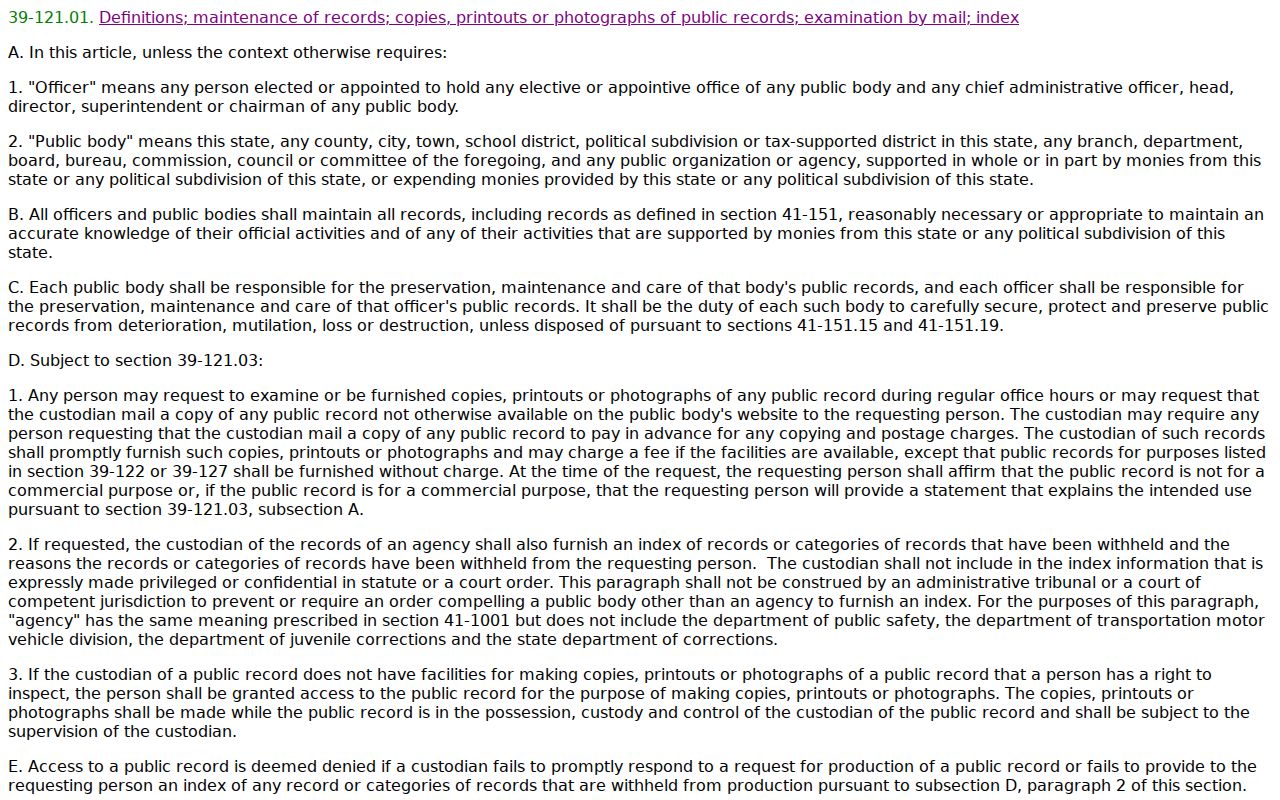
The statute supports lawful record access. It does not turn confidential judicial material into a public online result, and court rules, specific statutes, and orders still control what you may see.
Graham County Missing Search Results
A blank Graham County search does not prove no case exists. Check your spelling, court selection, and case number first. Coverage is the next suspect. Public Access excludes sealed cases, protection orders, probate, mental-health matters, victim or witness data, and juvenile delinquency or incorrigibility information. Adoption, severance, and dependency records carry special statutory confidentiality. Some juvenile traffic cases can still appear.
Local ordinance charges are a different kind of omission. They may be missing because of database coverage, not confidentiality. Contact GVC for its Safford, Thatcher, or Pima police file. Use Justice Court for a county or state officer citation. For a Superior Court probate or mental-health matter, ask the Superior Court clerk what lawful access exists.
Access and Restricted Cases
Sealed and confidential records stay out of Public Access and eAccess. An authorized party should contact the court holding the file and follow its process. Don't infer a restricted matter's contents from its absence. Arizona's criminal sealing law works by petition and court decision; it promises neither that every record disappears nor that every case qualifies.
Public Access still earns its keep for tracking your own public case, confirming a date, reading procedural history, or following a matter of public interest. A certified copy must come from the clerk. Rule 123, A.R.S. §8-208 for juvenile records, A.R.S. §36-509.01 for involuntary-treatment case records, and a court order can each narrow what Graham County displays or releases.
Verify the source. A Graham County search result is informational and refreshed weekly. Confirm any key entry with the court that maintains the original record.