
How to Get Court Records
First figure out which court holds the case. Check the caption, the notice, a citation, or the case number. The Graham County Clerk of the Superior Court holds those files. Felony, general civil, family, probate, and juvenile all count. Justice Court handles its own records. Its docket covers traffic, misdemeanor, eviction, protection-order, small-claims, and preliminary felony matters. The Gila Valley Consolidated Municipal Court keeps citation and city-code cases for Safford, Thatcher, and Pima.
No single service carries every Graham County court record, so several channels stay useful. Public Access offers a free statewide index. eAccess sells some eligible Superior Court papers. The clerk with the file can copy it at the counter. Phone questions about location go there too. The same office processes an official request. Superior Court requests can also be emailed or filled by mail. That applies once the clerk quotes the cost.
- Find the court name, case number, year filed, and exact paper needed.
- Check Arizona Public Access for the case history, then use eAccess if an eligible Superior Court document is offered.
- For an official Superior Court copy, take or send the county request form to the clerk. Email is accepted at superiorcourtforms@graham.az.gov.
- Call 928-428-3100 before travel to confirm file location, certification needs, payment, and access to older media.
- Contact Justice Court at 928-428-1210 or GVC Municipal Court at 928-432-4090 for their own records.
Graham County Court Record Form
The county's Request for Court Records form asks you to narrow the work. It wants a name, mailing address, phone, and email. Case number, case title or party names, and comments round it out. Rows for a document date and title let you name one judgment, minute entry, order, or other filing. You need not request the whole case file. Mark whether you need certification. Marriage-license requests get their own number, date, and applicant-name fields.
Deliver the form to the first-floor Superior Court clerk or email it. A case number works best. The year filed also helps, since without it the clerk adds a research charge. The five-business-day statement covers contact about fees only. It is not a promise that copies will be ready. Note: Give both the filing date and document title when you can. The Graham County clerk can then tell similar docket entries apart.
Types of Court Records
A Graham County docket is the chronological index. It can name the court, the parties and their roles, the filings, settings, interim rulings, disposition, and public financial events. The document behind an entry is a different thing. A complaint, motion, minute entry, notice, order, or judgment holds the filed text, while the index label only describes it.
Superior Court records span criminal, civil, family, probate, and juvenile matters, though access varies by law and order. Justice Court maintains civil traffic, criminal traffic, misdemeanors, civil claims, small claims, evictions, protection orders, and preliminary felony cases. The municipal court holds its traffic and code files. Graham County also has stored exhibits and FTR digital hearing recordings. Neither has a published one-step copy procedure.
- Docket or case-history entries
- Pleadings, motions, responses, and notices
- Minute entries, orders, judgments, and dispositions
- Public hearing settings and event records
- Exhibits, recordings, and transcripts when access is authorized
Three Graham County Record Layers
Three layers serve three needs: the free case history, a filed document, and a certified copy. Public Access is an informational index that updates weekly. It helps you locate a Graham County court record. You can track events too. The service warns its results may not be current, complete, accurate, or official. A filed paper may come through eAccess. The clerk is the other source.
An eAccess preview shows just the first page and carries an UNOFFICIAL watermark. Save a purchased file within 24 hours or buy it again. A certified copy adds the clerk's authentication. Electronic certification has a verification route good for 180 days. A receiving office may still want a raised seal. Ask that office which form it takes before you pay.
| Layer | What It Provides | Best Source |
|---|---|---|
| Case history | Event names, dates, settings, and outcome | Public Access, then the court for confirmation |
| Filed document | The text of a pleading, notice, order, or judgment | eAccess or the proper Graham County clerk |
| Certified copy | A clerk-authenticated reproduction | eAccess certification or the records custodian |
What a Court Record Contains
A Graham County court record is broader than one screen. The case header can show the number, filing date, title, category, status, court location, and judicial officer. Party information lists public procedural roles and counsel. The event history puts filings and court acts in date order. Hearing information may state a date, type, courtroom, and result.
The file behind it holds the documents listed below. An entry does not prove its paper is online. And a note reading "Document Not Available Online" does not mean the paper does not exist. Exhibits stay with the clerk. Access can depend on the exhibit and a court order. Sensitive details may also be removed from an otherwise public copy.
| Case Number | The court-assigned key used to search and request the file. |
|---|---|
| Pleadings | Complaints, petitions, answers, motions, and other filed requests or responses. |
| Orders & Judgments | The judge’s written rulings and formal resolution, where public. |
| Docket/Case History | A dated index of filings, events, hearings, and outcome. |
| Exhibits & Recordings | Materials held separately and released only through the lawful court process. |
Older Graham County Court Records
How far back do Graham County court records go online? eAccess has the answer for documents. It carries Arizona Superior Court civil and criminal papers filed on or after July 1, 2010. Treat that date as the limit on document images only. It does not mean an older Graham County case is off limits. Public Access may still index the whole history. A paper may predate the cutoff. It may simply not be there. Use the local request form in that case. Include the case number, or at least the filing year.
The county has posted no archive cutoff or microfilm range. No rule for spotting ordinary cases appears, and no turnaround is promised. If the file is old or lives on another medium, call before you drive over. One helpful detail comes from the court system's technology plan. It lists public-access computers. One serves the clerk, and one serves Superior Court. Two are shared by limited-jurisdiction operations. Ask which workstation holds the material you need before counting on a terminal.
Certified Copies and Fees
A plain copy just reproduces a filed paper. Certification adds the clerk's statement that the copy matches the original. Beyond that sit two specialized forms. Exemplification carries two seals. Authentication carries three. Ask the receiving office which one it wants before ordering. Published Graham County and statewide charges give you a planning figure, but eAccess checkout and the clerk's own quote set the real total.
Fees can stack on a paper order. A certified document sent by mail can bundle costs. The per-page charge, the certification, and shipping may land in one sum. Watch one trap: the $35 research fee kicks in whenever you supply neither a case number nor a year filed. The request form says nothing about how to pay, so hold off until the clerk confirms the amount and the accepted method.
| Item | Published Amount |
|---|---|
| Local plain copy | $0.50 per page |
| Local certification | $35 per certification |
| Research without case number or year | $35 |
| Shipping and handling | $8 |
| eAccess document | $10 under AO 2019-48; confirm at checkout |
| eAccess certified document | $39 under AO 2019-48; confirm acceptance |
| Exemplification / authentication | $70 / $105 on the current statewide schedule |
Graham County Clerk of the Superior Court
800 W. Main Street, first floor
Safford, AZ 85546
928-428-3100
Monday-Friday, 8:00 a.m.-5:00 p.m.
Graham County Court Recordings
Graham County records its proceedings on FTR digital equipment. No certified reporter serves on staff, per the county courts' 2026-28 technology plan. That shapes how you get a transcript. Call Superior Court first. Ask three things: which authorized transcription channel applies, what source recording exists, and how the quote will be set. The official material posts no local transcript tariff, so the quote you receive governs.
The clerk also holds exhibits from Superior Court proceedings. An exhibit is not a docket printout. No local exhibit-copy procedure is posted. Name the case and the exhibit, then ask the clerk whether inspection or copying is allowed. The docket entry listing the exhibit may be public. Even then, restrictions in the case or a court order still control.
Note: A label is only a label. A public event label can name a recording or exhibit without making the material itself ready for immediate copying.
Graham County Record Access Boundaries
What you see remotely is narrower than what the law allows at the courthouse. Arizona Code of Judicial Administration §1-604 ties remote access to Rule 123. It says this plainly. Nonsealed, nonconfidential records at a court facility stay open even if the web view shows less. The right Graham County records contact can explain which request process fits your situation.
The official A.R.S. §8-208 juvenile-record law shows one hard boundary. Its text is clear on one point. A missing online result is never proof that no court matter exists.
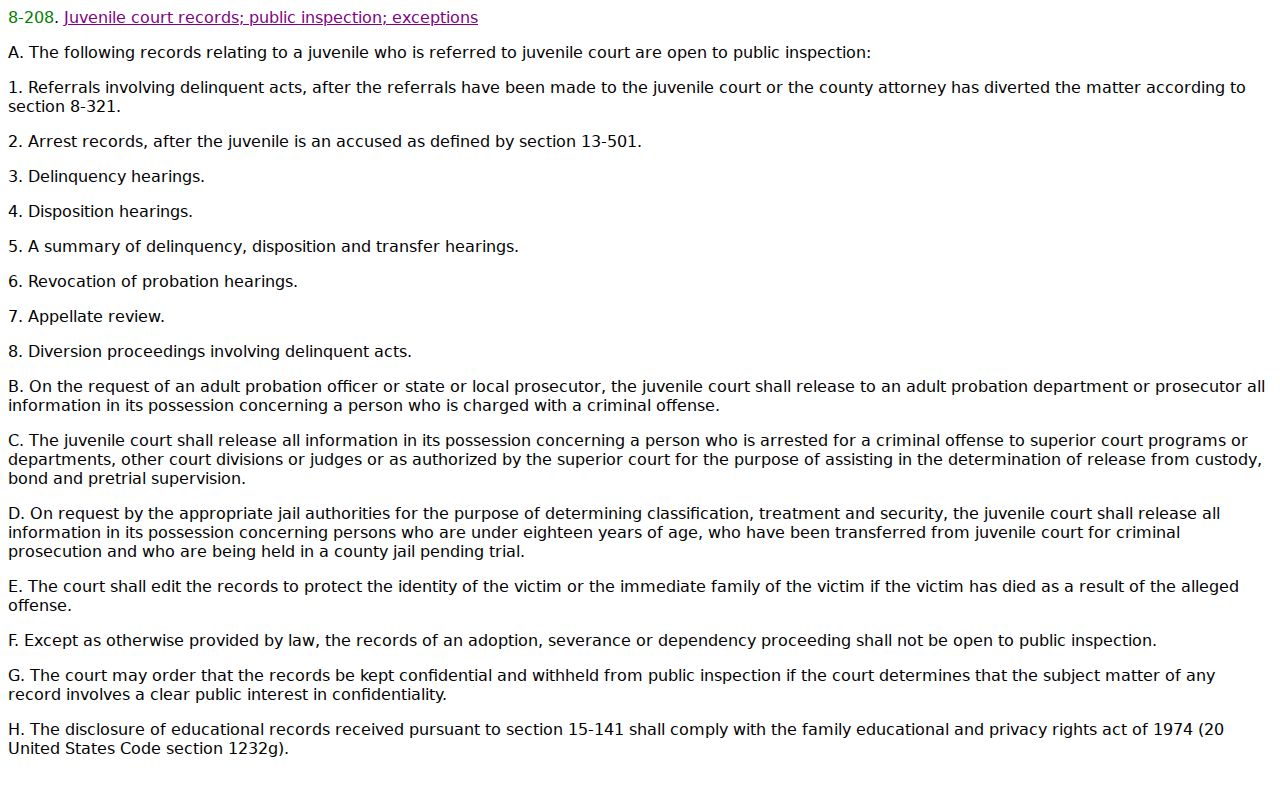
Adoption, severance, and dependency records generally stay closed to public inspection, and juvenile information follows its own access rules. A case involving a young person can still surface in some settings, though. Juvenile traffic matters, for instance, may display under the rules that govern that particular record.
Verify Graham County Court Copies
Preview the first page on eAccess before you buy. It lets you confirm the case number, filing date, document title, and court. That UNOFFICIAL watermark means something. The preview is not a certified Graham County court record. Treat it as a check, not a copy. Add nothing to your cart until the details match the docket entry you were chasing.
Save the purchased file within the 24-hour download window. What if the paper never shows up in results? Ask the clerk rather than assuming the filing vanished. The Graham County case search can supply the case number first. Still, the clerk who holds the file is the source for anything official.
Three Graham County Record Custodians
Heidi Torrio's office keeps the Superior Court records. It does not hold every Graham County court file. Justice Court and GVC Municipal Court keep their own limited-jurisdiction dockets. Send a city citation request to the Superior Court clerk and you invite delay. That paper belongs to a different court operation. Match your request to the office that created the record.
Traffic matters follow the officer and court named on the citation. A felony that started as a Justice Court CF matter is trickier. The preliminary hearing record and the later Superior Court prosecution can carry separate case numbers. Request each part from its own clerk. GVC says its record searches may take up to ten days. The court provides a request form.
Public Access and Sealed Records
Most Graham County Superior Court files are open. Law, court rule, and court orders still shield certain categories. Public Access leaves out a lot. Sealed matters, protection orders, probate, mental-health information, victim or witness data, and juvenile delinquency or incorrigibility information all stay off it. Local ordinance charges can be missing too. The reason is database coverage, not confidentiality.
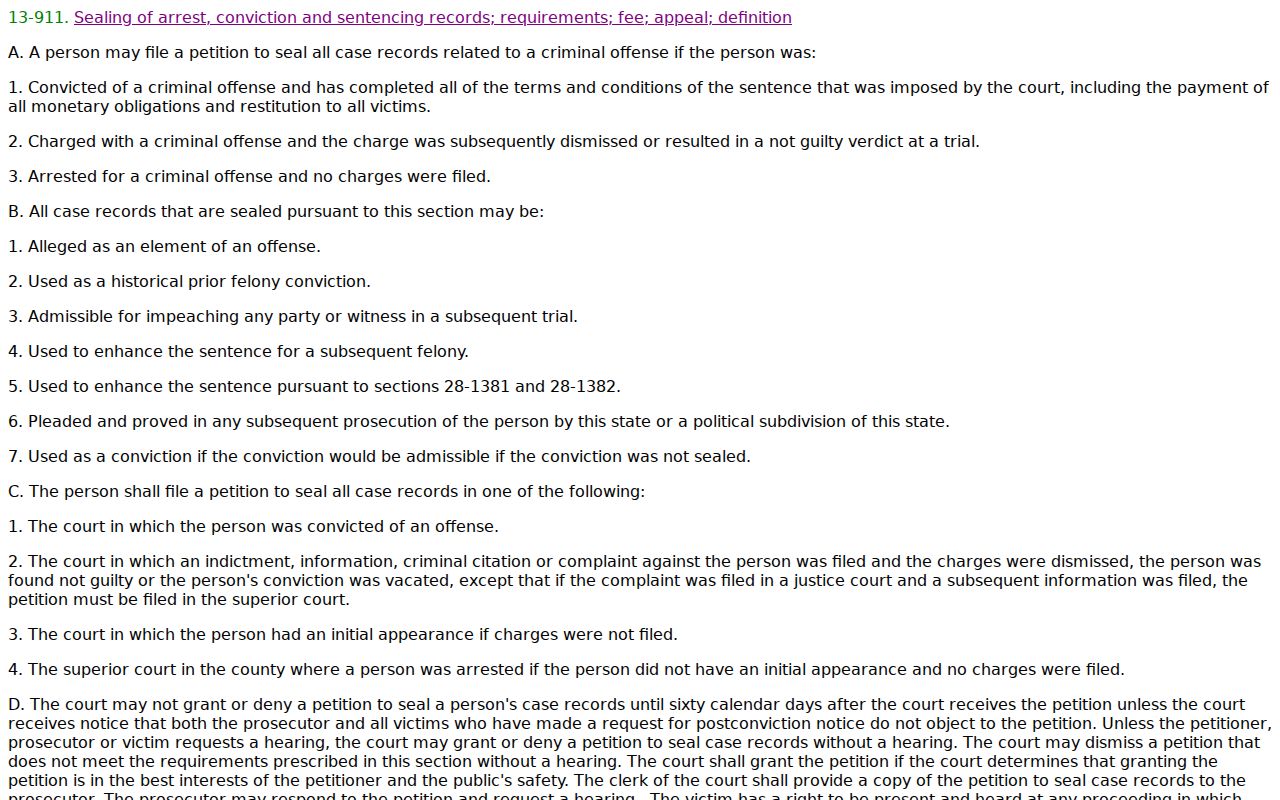
For sealed criminal cases, A.R.S. §13-911 sets out a petition process for sealing qualifying records. The statute spells out that formal route; it is not an automatic removal rule.
Need authorized access? Contact the court that holds the case. Never try to work around a restriction just because a category is missing online.
Key rules:
Arizona Supreme Court Rule 123 governs public access to judicial records and confidential categories.
A.R.S. §39-121.01 addresses prompt lawful inspection, copies, postage, fees, and withheld records.
A.R.S. §36-509.01 protects involuntary-treatment court case records except where authorized.
Check Graham County Record Details
Keep your request tight. Give the court and the case number. Then name the document by its title and date. Ask the clerk which form of copy you need: plain, electronically certified, raised-seal, exemplified, or authenticated. That single choice drives both the cost and how the record reaches you in Graham County.
One more caution about the court docket itself. Public Access refreshes each Friday. It only covers filings through Wednesday, so a new filing or a fresh hearing date may lag behind. For anything urgent, confirm with the setting court. Remember that a docket entry is an index, not a judgment. When official status or exact text matters, get the certified Graham County court record or the filed paper itself from the clerk.