
How to Search Civil Dockets
The free starting point is Arizona Public Access to Court Information. Pass its verification screen. Then run a search on a full case number or a party name. Set a court filter too, so common names do not drag in unrelated counties. What you get is an informational index, not the official Graham County civil docket. Updates land each Friday with data through Wednesday. So a fresh filing or a changed setting may not appear at once.
Work a civil docket search in this order:
- Read the court name on the complaint, notice, order, or case number.
- Search Public Access and match the court, number, filed date, category, and status.
- Read parties by their roles, then follow filings and hearings in date order.
- Use eAccess for an eligible Superior Court document behind an event.
- Ask the correct clerk for an older file, current setting, judgment, or certified copy.
Graham Civil Docket Routing Test
Where a Graham County civil docket lives depends on jurisdiction. The Graham County Justice Court publishes a $10,000 civil limit and a $5,000 small-claims limit, along with its allowable fees, interest, and costs. It also takes eviction cases. Anything touching title to real estate, divorce, juvenile matters, or general-jurisdiction claims belongs in the Superior Court of Arizona in Graham County. Gila Valley Consolidated Municipal Court decides no private civil lawsuits. It may handle protection-order matters within its authority.
| Matter | Court | Record keeper |
|---|---|---|
| General civil or title to real estate | Superior Court | Graham County Clerk of the Superior Court |
| Civil claim to $10,000 | Justice Court | Graham County Justice Court clerk |
| Small claim to $5,000 | Justice Court | Graham County Justice Court clerk |
| Private lawsuit | Not Municipal Court | Route by claim type and amount |
Some older county pages still list outdated small-claims limits. For current figures, rely on the Graham County Justice Court jurisdiction guide.
What a Civil Docket Shows
A Graham County civil docket names the case before it tells its story. Start with the case number, filed date, title, category, status, court, and judicial officer. Next find the plaintiff or petitioner and the defendant or respondent. The chronology that follows can hold the complaint or petition, service papers, an answer, motions, notices, orders, hearing events, and the judgment. Later public post-judgment filings land there too.
| Case Number | The court-assigned key; Justice Court uses CV for its published civil, eviction, and protection categories. |
|---|---|
| Parties | Unrestricted participants and attorneys shown in their procedural roles. |
| Filings | Pleadings, service records, notices, and other docketed papers. |
| Motions and Orders | A request and the later court response, which must be read separately. |
| Hearings | Courtroom, date, type, and result when the public system supplies them. |
| Judgment | The outcome entry; the filed judgment controls its exact terms. |
Pair each Graham County civil filing with the event that answers it. Service papers show notice was given. A motion records a request; an order records the court's response. The judgment itself controls the result. That holds even when the public docket shortens its wording.
Search Graham Civil Dockets in eAccess
Arizona eAccess is a separate service from the free Public Access site. You need an account. It offers eligible Superior Court civil and criminal documents filed from July 1, 2010 forward. After login, Case & Party Search comes up selected by default. Type a full or partial case number or party name, and pick Graham County Superior Court rather than All Courts when that would narrow things down. Advanced Search lets you add criteria joined with AND, OR, or NOT.
| eAccess field | Required | Use |
|---|---|---|
| Username and password | Yes | Account login |
| Case & Party Search | Default tab | Basic civil case route |
| Case number or party name | Search key | Full or partial values accepted |
| Select a Court | Optional | Choose Graham County Superior Court to narrow |
| Advanced Search | Optional | Add criteria with AND, OR, or NOT |
The official eAccess service presents the account-based search and purchase path.
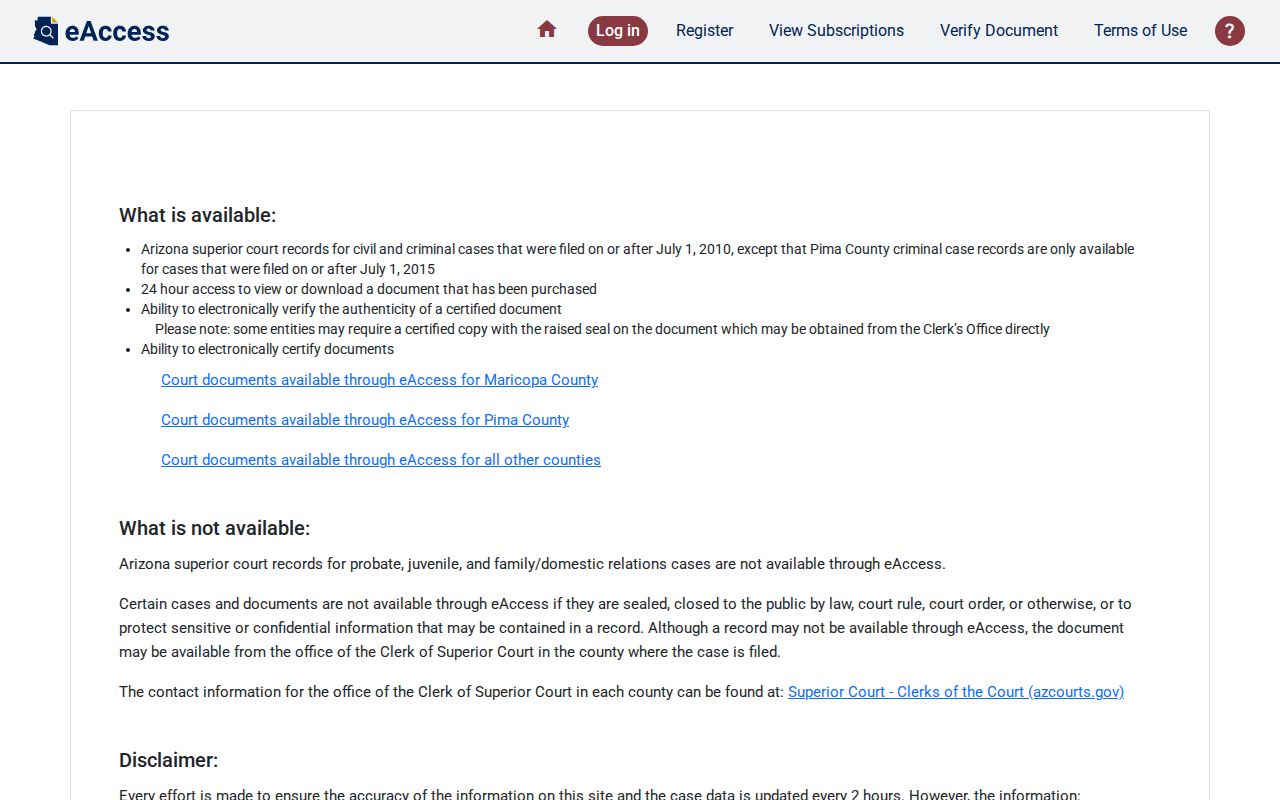
Once a Graham County civil docket match comes up, the eAccess screen supports document access. Not every eligible filing is there, though. Preview and cart controls appear only where the system offers the document.
Types of Civil Cases on the Docket
Civil is a broad label in Graham County. The court matters more than that one word. So do the amount in dispute and the relief sought. Superior Court takes general civil cases plus categories reserved to it. Justice Court takes its published limited civil work. Family and probate cases count as civil in the wide sense. Yet statewide Public Access leaves out probate and limits other sensitive material.
- General civil claims within Superior Court jurisdiction
- Justice Court civil claims within the current local limit
- Small claims within the current local limit
- Eviction cases filed in Justice Court
- Real-property title, divorce, and other Superior Court matters
A public case category does not promise that every filing can be viewed remotely. When the online index falls short, ask the clerk of the court that keeps the file.
Pair Graham Civil Docket Motions With Orders
A motion entry proves only that a party asked the court to act. It proves nothing about whether the request was granted. Find the later order. Compare its date and title. The same caution applies to service: filing a complaint opens the case, but the docket may list later service papers before the responding party's deadline or answer arrives. A filed claim is not automatically ripe for judgment.
- Motion
- A written request for a procedural or substantive court action.
- Order
- The judge's written direction or ruling on an issue.
- Service
- Formal delivery of the papers that begin the claim.
- Default judgment
- A judgment entered after required steps when a party fails to respond or appear.
Work through each Graham County civil docket entry by date. When exact terms matter, open the filed order or judgment itself.
Settings and Hearings on Civil Dockets
A civil setting might be a scheduling event, motion hearing, pretrial conference, or trial. It is not a criminal arraignment and does not carry that meaning. In a Graham County civil docket, check the hearing block. Match it against notices, minute entries, and orders. A continuance leaves the old event sitting in the case history. So the most recent setting document controls.
The county's court-calendar hub links separate calendars for Superior Court, Judge Pro Tem, and Justice Court. Statewide Public Access refreshes only weekly. So call the court that set the hearing for a last-minute check. Superior Court uses 928-428-3100. Justice Court uses 928-428-1210. Served notice and a recently filed order can be more current than an older online event.
Find Graham Civil Docket Resets
Two dates? Do not assume the later one wins by position alone. Note each event date and setting date first. Then hunt for the notice of setting, motion to continue, signed order, or minute entry that ties the change together. A request to continue moves nothing by itself. The court's order or updated notice does.
Current-date check: Read the newest filed setting paper, then confirm it with the clerk of the court named on that paper.
Both courts sit at 800 W. Main Street in Safford. They still run on separate clocks. Justice Court keeps a Monday through Thursday schedule, 7:00 a.m. to 6:00 p.m. The Superior clerk opens Monday through Friday, 8:00 a.m. to 5:00 p.m. Need a Friday confirmation of a Graham County civil docket reset? Only the Superior window will be there for you.
Public Access to Civil Dockets
Arizona Supreme Court Rule 123 sets the baseline for public access to judicial records. It allows limits for confidential material and remote display. Arizona Code of Judicial Administration §1-604 draws a sharper line. A record can be nonsealed and nonconfidential, open for inspection at the courthouse, yet still narrowed for remote viewing. So the Graham County civil docket you see online is not the full measure of what the law lets you inspect in person. The official Arizona court rules collection publishes the current Rule 123 access standards.
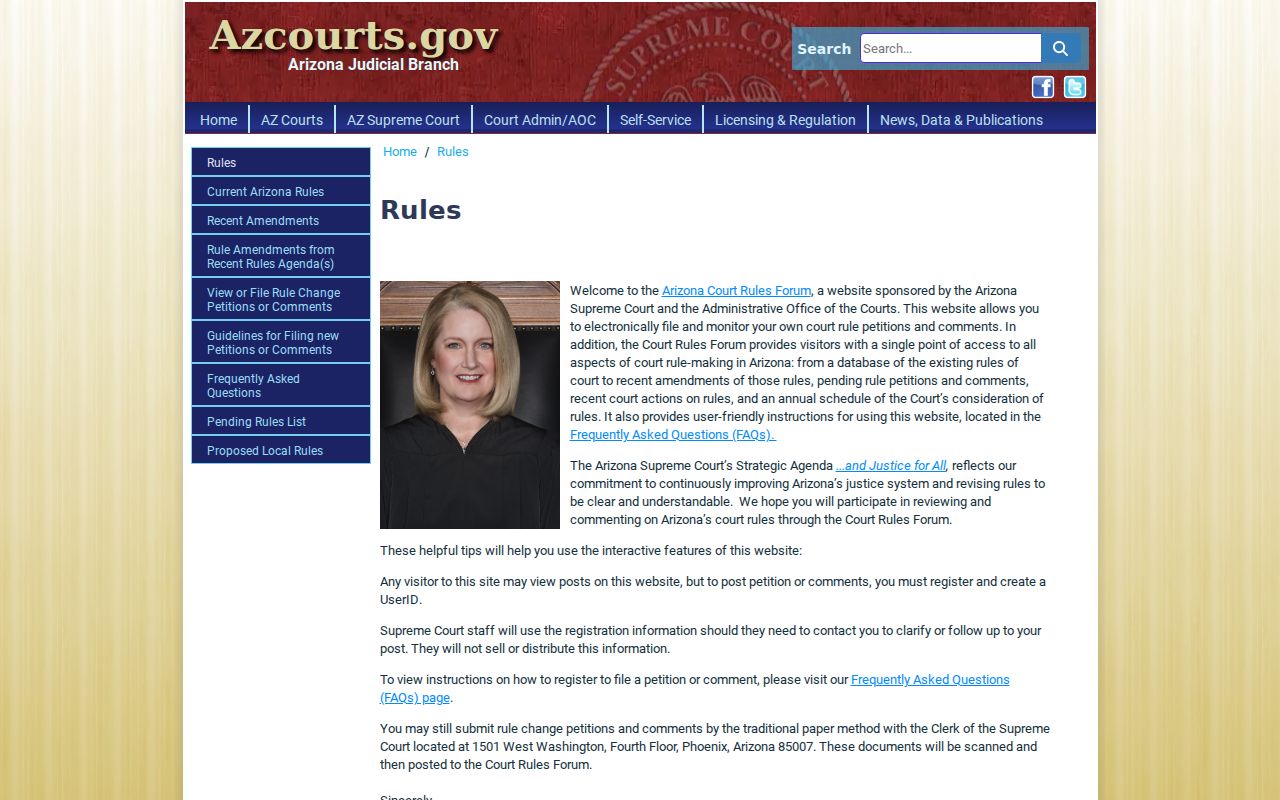
That is why a public index can leave things out. Some material needs a request, judicial review, or authorized access before the court releases it.
Graham Civil Docket Eviction Sealing
Eviction cases in Justice Court make up part of Graham County's limited civil work. Under A.R.S. §33-1379, Arizona law lets eviction records be sealed for specified outcomes. Once sealed, a result may vanish from remote docket search, so an empty online search does not prove no case was filed. The court decides sealing based on the law and the case facts.
Other civil categories are closed for different reasons. Probate is excluded from Public Access. Adoption, severance, and dependency records carry statutory confidentiality, and involuntary-treatment case records are protected too. If you are authorized to view a restricted civil file, ask the Superior or Justice Court clerk what proof and process apply. Ordinary public-record access never overrides a sealing order or a confidentiality rule.
Older Graham Civil Docket Documents
eAccess starts with July 1, 2010 for eligible Graham County Superior Court civil documents. That cutoff limits what you can pull online, not what exists. Plenty of older cases still sit in paper files. Public Access may index their case information. For an older paper or a filing that is not online, use the Graham County Request for Court Records form. Hand it in at the clerk's first-floor counter, or email it to superiorcourtforms@graham.az.gov. Call 928-428-3100 before traveling to confirm the file location, certification choice, and access.
Give the exact case number, year, document title, and filing date when you have them. Copies run $0.50 per page, plus $35 per certification and $8 shipping. Without a case number or year, a $35 research charge may apply. The form promises contact within five business days to confirm fees, not final delivery. Justice Court civil and small-claims files stay with Justice Court. They sit at its own counter and direct line.
Public-access PCs sit at spots across the court system, per the county technology plan. Call the right clerk first. Learn which terminal can show the Graham County civil material you need.
Graham Civil Docket eFiling Milestone
Graham County's civil filing system arrived in stages. Superior Court civil initiation and later efiling through eFileAZ began locally in 2018. Then, on March 30, 2026, Graham County Justice Court started accepting eFileAZ initiation and subsequent filings for civil, eviction, and small-claims matters. Filing online puts papers into the court workflow. It does not make every paper anonymously viewable online. The Arizona Judicial Branch eFileAZ page describes the statewide filing service.
Each tool does a different job. eFileAZ submits documents, Public Access indexes case events, and eAccess sells eligible Superior Court document access.
Certified Graham Civil Docket Judgments
A judgment entry in the Graham County civil docket summarizes an outcome; the filed judgment holds the actual terms. eAccess may offer an eligible document with electronic certification, while the local clerk can hand you plain or certified copies. Ask the receiving office first whether it accepts electronic certification or requires a raised seal.
| Record layer | What it provides | Best use |
|---|---|---|
| Public Access case history | Free informational event index | Locate and follow the case |
| eAccess document | Eligible filed Superior Court paper | Read the filing behind an event |
| Clerk-certified copy | Court-authenticated record | Official proof when required |
The Graham County court records reference lays out the full copy-request path and the published fee distinctions.
Confirm Graham Civil Docket Custody
When no online docket result appears, the right clerk is the best fallback. Superior Court civil files belong to the Graham County Clerk of the Superior Court. Justice Court keeps its own civil, eviction, and small-claims files. The county publishes no general fax-submission policy, no guaranteed turnaround, and no ordinary-case ID rule for Superior Court copy requests. So confirm each missing detail rather than assuming. The official Arizona Courts Locator verifies the court's address and jurisdiction.
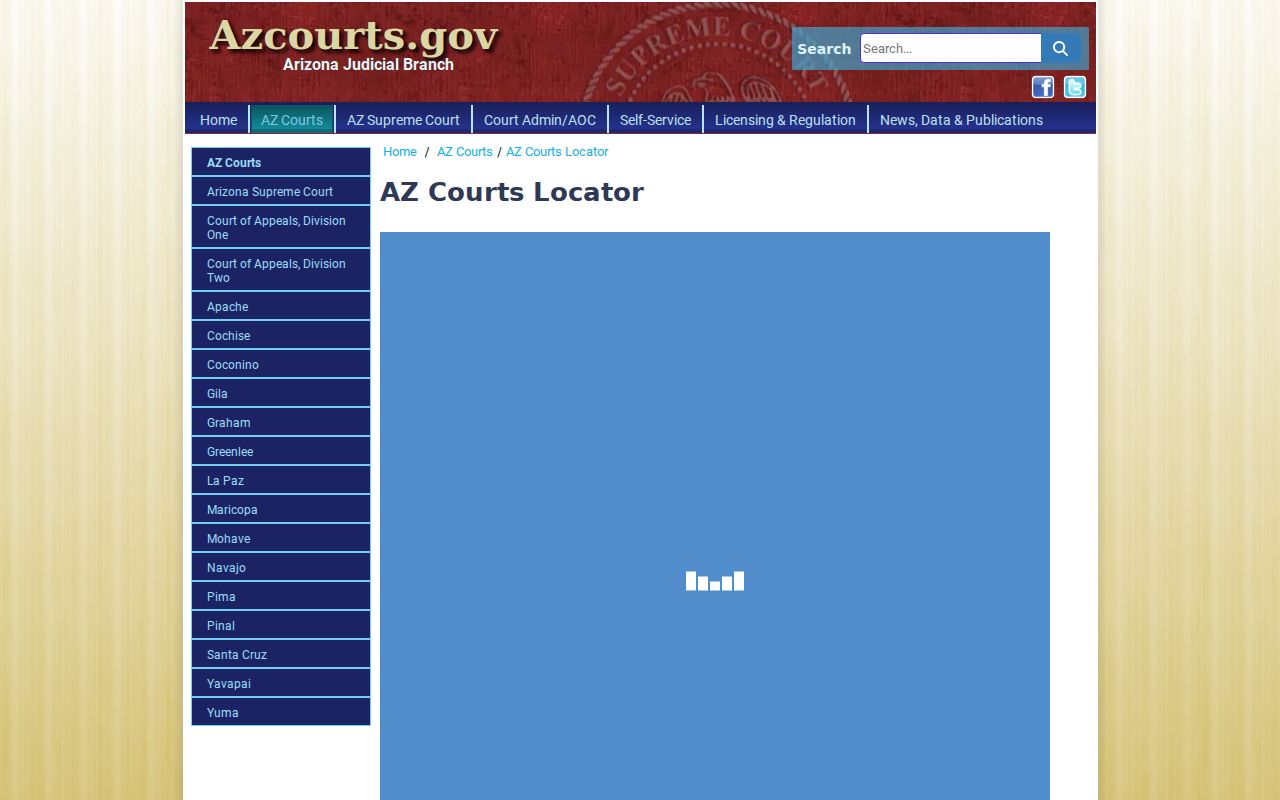
Use that court identity to pick the right counter, line, and copy authority for the Graham County civil record you need.